

How to Plan a Kitchen Remodel
Expert Insights on Budgets, Timelines, and Designing Your Dream Space
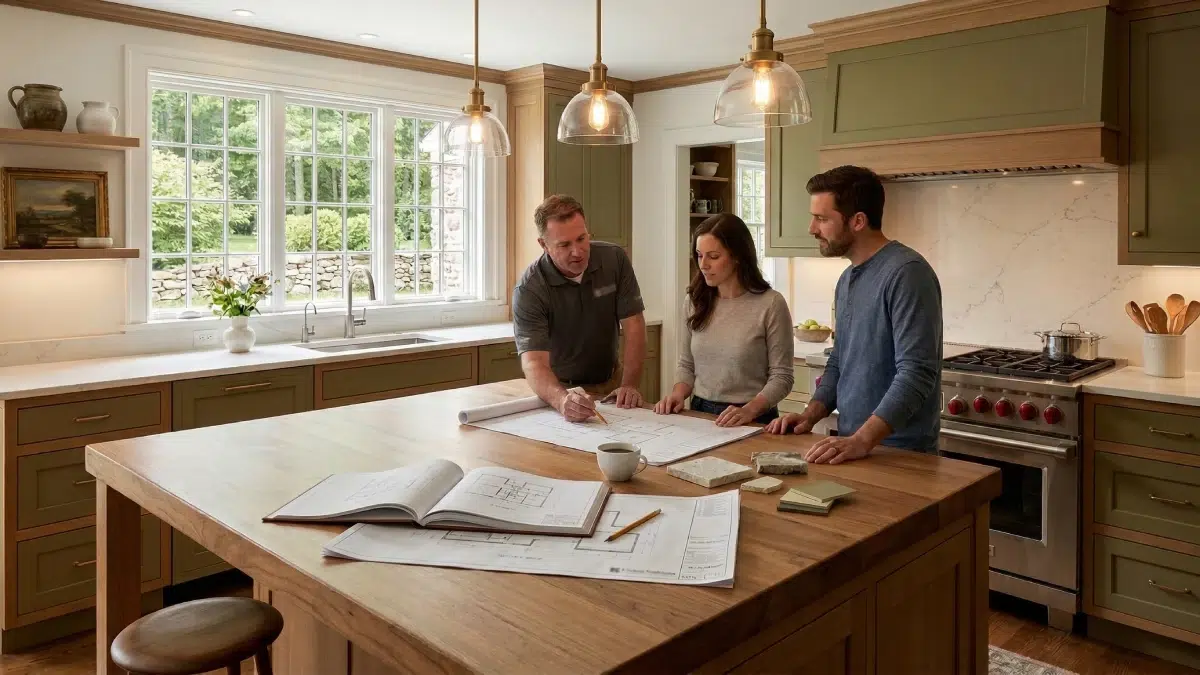
A kitchen remodel is one of the largest and most personal investments you will make in your Connecticut home. It’s more than just upgrading cabinets or picking out countertops—it’s about completely changing how you cook, entertain, and live in your space. But as many homeowners discover the hard way, jumping in without a rock-solid plan is a fast track to timeline delays and budget overruns.
To help you get it right the first time, our team at Kitchen Traditions has put together the realistic timelines, proven steps, and baseline financial expectations you need to know before starting a renovation in Danbury, Fairfield County, or the surrounding areas.
Ready to skip the stress and start planning?
A Collaborative Design Process
If you live in Danbury or the broader Fairfield County area, you might already know Kitchen Traditions for our highly functional, beautifully crafted kitchens. Our secret isn’t just the materials we use; it’s the people behind the designs. We believe the best living spaces are the result of true, open collaboration.
Founder and owner Neil Orwick holds degrees in visual arts and history, allowing him to bring a refined sense of architectural context to every home he works on. Neil leads a powerhouse team of professionals, including senior designers Scott Johnson and David Devendorf.
Scott brings over 40 years of hands-on construction and design experience to the table—meaning he is highly skilled at predicting and solving problems before they happen. David offers 35 years of expertise as an architectural designer and former builder, with an incredible portfolio of over 1,500 successful projects. Together, this team ensures your project benefits from a massive shared knowledge base, balancing highly imaginative design with practical, field-tested construction methods.
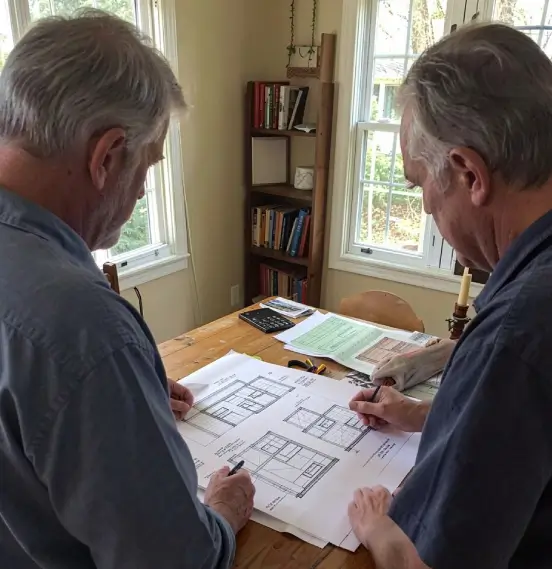
Key Planning Steps for a Successful Renovation
The foundation of a great remodel is laid long before anyone picks up a sledgehammer. Whether you are knocking down walls to expand or just completely updating your finishes, here are the critical first steps:
Step 1: Define Your Core Goals & Budget
Be honest about your primary motivation. Are you remodeling because the current layout drives you crazy, your finishes are from the 1990s, or you want to maximize your home’s resale value? Establish a strict, realistic budget early to anchor the rest of your decisions.
Step 2: Optimize the Layout
Focus heavily on the “work triangle.” Optimizing the traffic path between your refrigerator, sink, and cooktop is the difference between a kitchen that just looks good and one that is actually a joy to cook in.
Step 3: Measure With Precision
Guesswork will cost you thousands. Our team creates highly detailed, to-scale floor plans that account for every hidden plumbing line, electrical outlet, window casing, and door clearance.
Step 4: Select Materials Proactively
Finalize your appliance choices, custom cabinetry, countertops, and flooring early in the process. Securing these materials now ensures you stay on budget and prevents major construction delays waiting on backordered items.
Step 5: Partner with Trusted Professionals
Know what you can handle and when it’s time to call the experts. Moving load-bearing walls, electrical rewiring, and plumbing all require licensed contractors. This is where Neil and the design-build team at Kitchen Traditions step in to manage the heavy lifting from your first sketch to the final coat of paint.
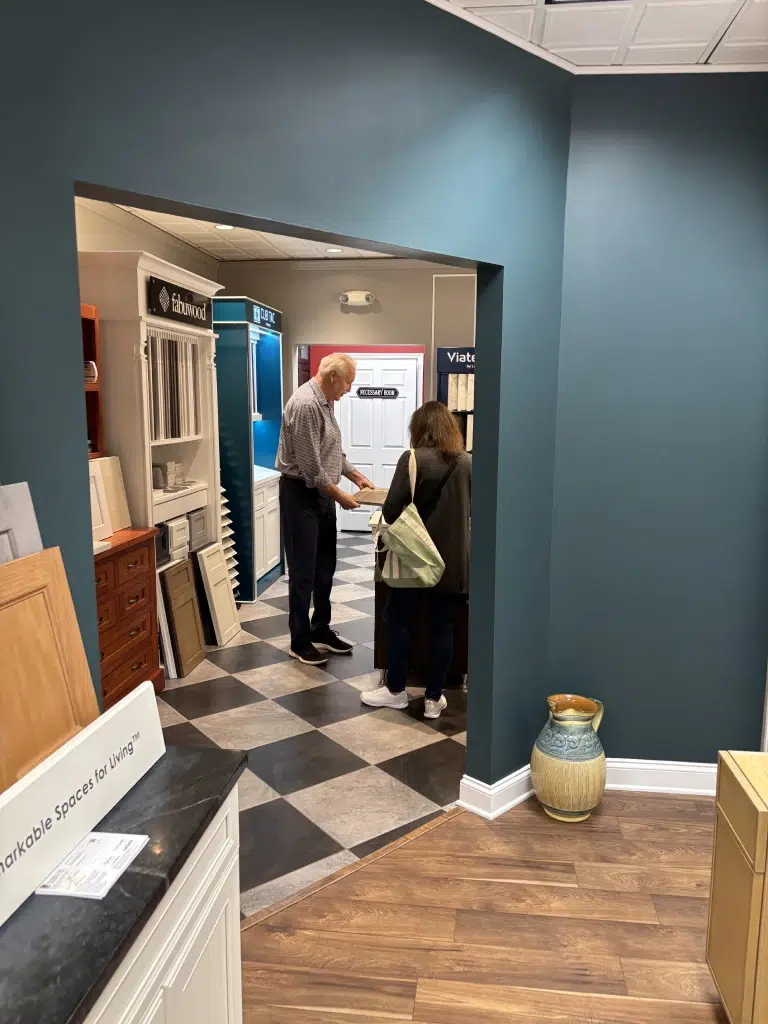
Where Does Your Kitchen Remodel Budget Go?
Let’s talk numbers. Understanding how your funds are distributed is the best way to prioritize your wish list. Kitchen remodeling costs in Fairfield County and surrounding parts of Connecticut are significant, but they yield incredible returns when managed correctly. Based on current local market data, a mid-range kitchen remodel in our area typically starts around $45,000, while a fully custom, luxury renovation may easily exceed $230,000.
While every home is unique, a standard, well-planned kitchen remodel budget usually breaks down like this:
- Custom & Semi-Custom Cabinets: 25% – 35% of the total budget.
- Professional Labor & Installation: 20% – 35% of the total budget.
- High-End Appliances: 10% – 15% of the total budget.
- Countertops (Quartz, Natural Stone): 10% – 15% of the total budget.
- Flooring, Lighting Design & Backsplash: 10% – 20% of the total budget.
The Implementation Timeline
Once the design is locked in and materials are ordered, here is the step-by-step physical transformation you can expect in your home:
Preparation
Setting up a temporary kitchen space to keep your daily routine running, while finalizing all design documents and receiving material deliveries.
Demolition (1-2 Weeks)
The safe, clean removal of old fixtures, cabinetry, and outdated appliances.
Rough Construction
The vital “behind-the-walls” phase. This includes structural framing, plumbing updates, electrical rough-ins, HVAC routing, and putting up new drywall.
Installation
Setting the stage with durable new flooring, followed by the precise, perfectly leveled installation of your new cabinets and custom countertops.
Finishing Touches
The details that bring the room to life, including hooking up modern appliances, setting the tile backsplash, and painting.
Final Walkthrough
A comprehensive review of the completed space with the Kitchen Traditions team to ensure every single detail meets our high standards.
A Tradition of Excellence
Take the Next Step
A major kitchen remodel shouldn’t feel like taking on a second full-time job. By understanding the true costs, local timelines, and necessary preparation steps upfront, you can approach your home improvement project with confidence and excitement.
When you are ready to bring your vision to life, Neil and the collaborative team at Kitchen Traditions are committed to making your project a highly rewarding experience.
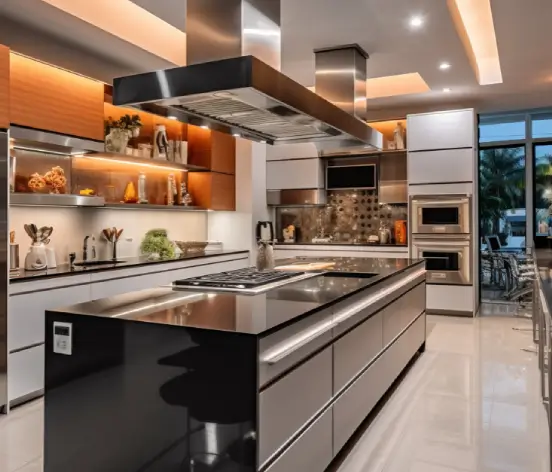
Frequently Asked Questions | Planning A Kitchen Remodel
Q.1. How much should I realistically budget for a remodel?
A.1. Financial and real estate experts recommend setting aside 5% to 15% of your home’s total property value for a comprehensive kitchen remodel to maximize your return on investment (ROI). A standard breakdown often dedicates roughly 30% to cabinetry, 20% to labor, and 15% to new appliances. Most importantly, always build a 10% to 15% contingency fund into your baseline budget to handle any unexpected plumbing or electrical issues hidden behind your older walls.
Q.2. How long does the actual renovation take?
A.2. While the active, on-site construction phase usually spans 6 to 8 weeks, the entire journey takes much longer. Expect to spend 4 to 8 weeks solely on layout and planning. Furthermore, acquiring local municipal permits and waiting for custom cabinetry deliveries can add several months to the schedule before the first hammer ever swings.
Q.3. Does keeping the current kitchen layout really save money?
A.3. Yes, it makes a massive difference. Retaining your existing footprint by keeping the sink, stove, and dishwasher in their current locations avoids the heavy labor expenses associated with rerouting complex plumbing, gas, and electrical lines. This strategy can save you anywhere from $300 to $1,000 per major fixture. However, if your current layout is highly inefficient, we advise investing in correcting it rather than letting a bad design ruin your daily routine and your home’s resale value.
Q.4. Which materials are the most durable for a high-traffic family kitchen?
A.4. For countertops, engineered Quartz is an industry favorite because it is non-porous, making it highly resistant to scratches and everyday stains. If extreme, direct heat resistance is a priority for the chefs in your home, materials like soapstone or Dekton are excellent alternatives. For flooring, many top designers now favor Luxury Vinyl Plank (LVP) over traditional hardwood; it is 100% waterproof and specifically engineered to withstand heavy foot traffic, dropped pots, and frequent spills.
Q.5. What is the number one piece of advice for a successful remodel?
A.5. Finalize every single practical and aesthetic decision before demolition begins. Mid-project indecision and “change orders” are the leading causes of blown budgets and massive schedule delays. We strongly recommend identifying your current “pain points”—such as inadequate task lighting or a lack of prep space—early on. This guarantees your new kitchen design will actually solve your real-world frustrations, rather than just covering them up with new cabinets.
