

Comparing Quartzite and Engineered Quartz Countertops
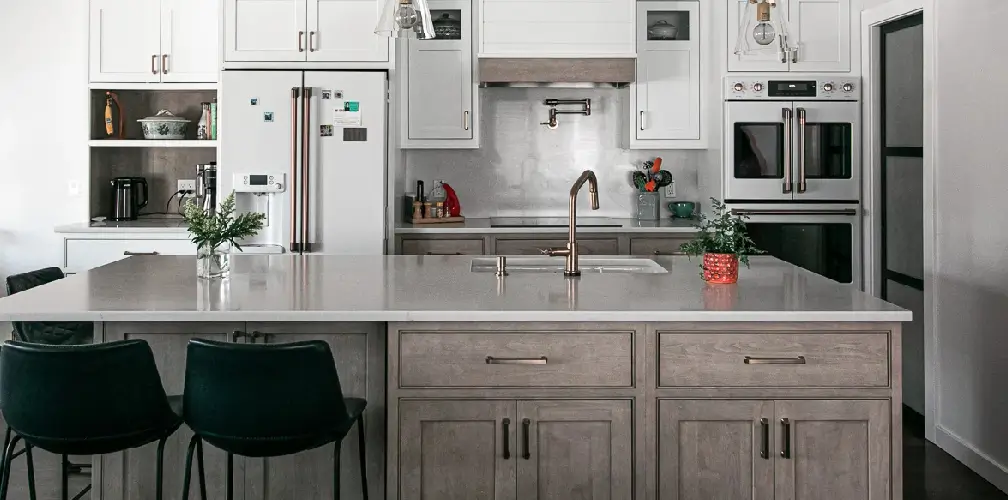
When it comes to remodeling your kitchen, few decisions have as much visual impact—and are as permanent—as your choice of countertop material. For Connecticut homeowners with busy families, the stakes are even higher: you need surfaces that are beautiful, durable, heat-resistant, and able to stand up to everyday spills and mishaps.
Among the leading contenders in today’s market are quartzite and engineered quartz. But which is right for your home?
In this in-depth guide, we’ll present side-by-side comparisons that examine the differences between the two materials, discuss their real-world performance, and answer questions to help you make an informed decision for your kitchen design and remodeling project.
What Is Quartzite?
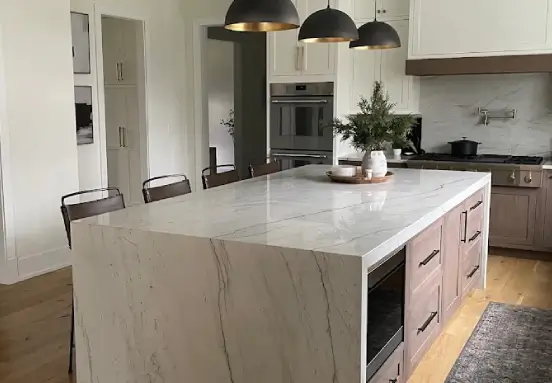
Quartzite is a natural stone formed from sandstone and transformed by heat and pressure deep within the earth. This metamorphic process creates a hard, dense stone that’s prized for its one-of-a-kind veining and color variations. No two slabs are ever exactly alike, which makes quartzite a popular pick among homeowners desiring a unique, natural look.
Advantages of Quartzite
- Uniqueness: Each slab is one-of-a-kind, offering the earth’s organic beauty.
- Heat Resistance: Quartzite can withstand hot pots and pans better than most engineered surfaces.
- Durability: With proper sealing, quartzite is resistant to scratches and etching.
Considerations
- Porosity: Being a natural stone, quartzite is porous and requires regular sealing to prevent staining.
- Maintenance: Needs periodic sealing and gentle cleaning to retain its appearance.
- Cost: Often more expensive than engineered quartz due to quarrying and fabrication.
What Is Engineered Quartz?
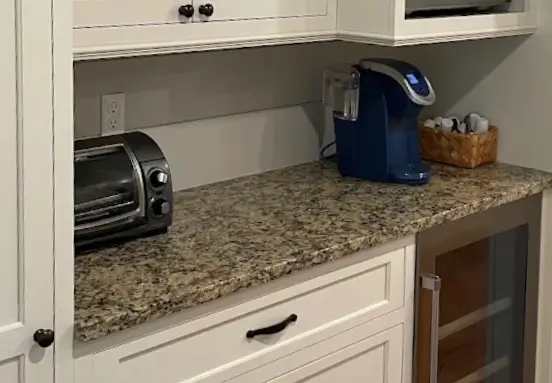
Engineered quartz is a man-made material composed of roughly 90% ground quartz minerals mixed with resins, polymers, and pigments. The result is a non-porous, highly durable countertop surface available in a huge variety of colors and patterns—including designs that replicate natural stone.
Advantages of Manufactured Quartz
- Non-Porous Surface: Resists staining from coffee, wine, oils, and more—no sealing required.
- Low Maintenance: Easy to clean with soap and water; no need for special care.
- Consistent Appearance: Uniform color and patterning make it easy to match slabs.
- Versatility: Available in a wide range of colors and styles, including modern and classic looks.
Considerations
- Heat Sensitivity: While engineered quartz is fairly durable, extreme heat can damage the resin. You must use trivets or hot pads for pans.
- Not UV Stable: Prolonged exposure to sunlight can lead to fading, making it less appropriate for outdoor kitchens.
- Cost: While frequently more affordable than exotic natural stones, premium brands and colors have increased in price.
Durability Review: Real-World Performance in Actual Homes
For families who cook, bake, and entertain regularly, countertops are subjected to continual challenges—hot pots, accidental spills, knife marks, and creative messes from kids. Here’s how quartzite and engineered quartz stack up:
Quartzite in the Family Kitchen
- Heat Resistance: Can handle hot cookware without risk of scorching or discoloration.
- Scratch Resistance: Very hard, though not completely immune to scratches. Using cutting boards is still recommended.
- Stain Resistance: With regular sealing, quartzite resists stains from juice, oil, and wine. However, neglecting sealing can lead to permanent staining.
- Longevity: With proper care, quartzite countertops can last decades.
Engineered Quartz in the Family Kitchen
- Stain Resistance: Non-porous surface shrugs off coffee, tomato sauce, and kids’ juice spills. No sealing ever required.
- Scratch Resistance: Tough, but not invincible. Avoid cutting directly on the surface to prevent marks.
- Heat Resistance: More sensitive to high heat. Placing hot pans directly on the surface can cause discoloration or cracking.
- Longevity: Can last for years with minimal maintenance.
Everyday Maintenance: What to Expect
Quartzite: Needs periodic sealing—typically once a year. Clean spills quickly with mild detergent and water. Avoid acidic cleaners.
Engineered Quartz: Wipe down with soap and water. No sealing needed. Steer clear of harsh chemicals and abrasive pads.
Style and Appearance Considerations
Quartzite: Offers dramatic veining and a natural, organic look. Perfect if you desire a statement island or unique focal point.
Engineered Quartz: Permits precise color and pattern control. Ideal if you want a defined aesthetic or need to match multiple surfaces.
Environmental Impact
Quartzite: Mined from natural quarries and shipped, which can have a larger carbon footprint. However, it’s all-natural and contains no resins.
Engineered Quartz: Uses natural minerals but includes synthetic resins. Some manufacturers use recycled materials and eco-conscious practices.
Cost Comparison
Quartzite: Ordinarily ranges from $80 to $200 per square foot installed, depending on rarity and source.
Engineered Quartz: Usually $60 to $150 per square foot installed. Prices vary by brand, color, and edge profiles.
Final Thoughts: Which Should You Choose?
If you crave the look of natural stone and don’t mind some yearly maintenance, quartzite delivers beauty and heat resistance that’s hard to match. For families who value worry-free cleaning and stain-proof performance, engineered quartz is an excellent choice—just remember to protect it from high heat.
Ultimately, your decision will depend on your lifestyle, appearance preferences, and willingness to perform occasional upkeep. By understanding the strengths and drawbacks of each material, you can choose a countertop that raises your kitchen’s style and stands up to the demands of daily family life.
Ready to discuss new countertops for your kitchen? Contact Kitchen Traditions at (203) 791-0501 to schedule a consultation. We design and install countertops and offer complete kitchen remodeling in Connecticut for homes of all sizes, ages, and architectural styles.
Homeowners’ Common Countertop Questions
Will my quartzite countertop stain easily if my kids spill juice or ketchup?
With proper sealing, quartzite is resistant to stains. However, it’s important to wipe up spills quickly and reseal yearly to maintain protection.
Can I put hot pans directly on engineered quartz?
It’s best to use trivets or hot pads. Direct high heat can damage the resin in engineered quartz, causing discoloration or even cracks.
Which is more child-friendly: quartzite or engineered quartz?
Engineered quartz is generally more forgiving against stains and requires less maintenance, making it the preferred option for families with young children.
How often does quartzite need to be sealed?
Most experts recommend sealing quartzite once a year, but frequency may differ based on usage and the specific stone.
Is manufactured quartz environmentally friendly?
Many engineered quartz brands incorporate recycled materials and follow environmentally friendly manufacturing practices. However, the use of synthetic resins means it’s not as natural as quartzite.

